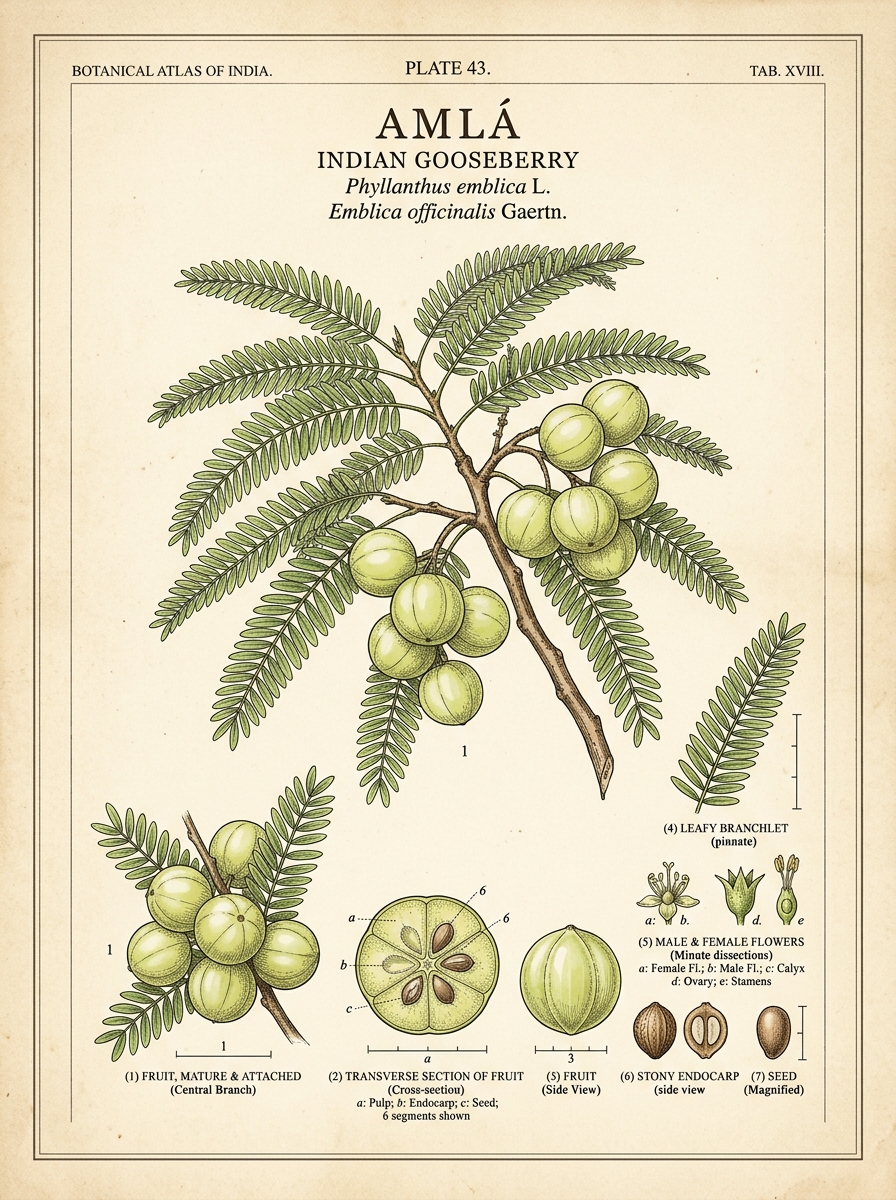
Botanical Plate · 19th c. Scientific AtlasPhyllanthus emblica (syn. Emblica officinalis)
Ayurvedic & Adaptogenic BotanicalsArtisanal Specialty
Amla (Indian Gooseberry)
Native / Vernacular: [आमलकी]
Phyllanthus emblica (syn. Emblica officinalis)·Family: Phyllanthaceae
Primary Geographic TerroirPratapgarh & Uttar Pradesh Forests, India
Flavor Profile & Aroma Notes
SourAstringentSweet finishBitter
"Tart, crisp, fresh tannin aroma with a remarkable lingering sweet aftertaste"
Vedic Ayurvedic Energetics
Rasa (Taste)Pancha-Rasa (Contains 5 of 6 tastes: Sour, Astringent, Sweet, Bitter, Pungent — lacking only salty)
Virya (Energy)Shita (Cooling)
Vipaka (Post-Digest)Madhura (Sweet)
Prabhava (Special)Rasayana (Anti-aging & Cellular Rejuvenation)
Ayurvedic classification based on Classical Samhitas (Charaka & Sushruta). Balances doshas when formulated in appropriate dietary proportions.
Bioactive Compounds & Health Benefits
- ✓One of nature's densest sources of bioavailable Vitamin C and heat-stable tannins (emblicanin)
- ✓Potent liver detoxifier, promotes collagen synthesis and hair follicle vitality
- ✓Core active pillar of the ancient Ayurvedic longevity formula Chyawanprash
Identified Active Phytochemicals:
Emblicanin A & BEllagic acidGallic acidAscorbic acidChebulagic acid
Kitchen & Chef Applications
- Preserved in spiced mustard oil pickles (Amla Achar) or sweet syrup (Amla Murabba)
- Juiced fresh with ginger and black salt as a morning metabolic tonic
- Sun-dried (Khatta Amla) for digestive post-meal mouth fresheners and dal souring
Artisanal Flavor Pairings
GingerJaggeryMustard OilBlack SaltCuminTurmeric
Harvest Season & Pantry Care
Harvest Window:Winter (December - February)
Storage Guidelines:Fresh fruits refrigerate up to 3 weeks; dried or pickled stores for years.