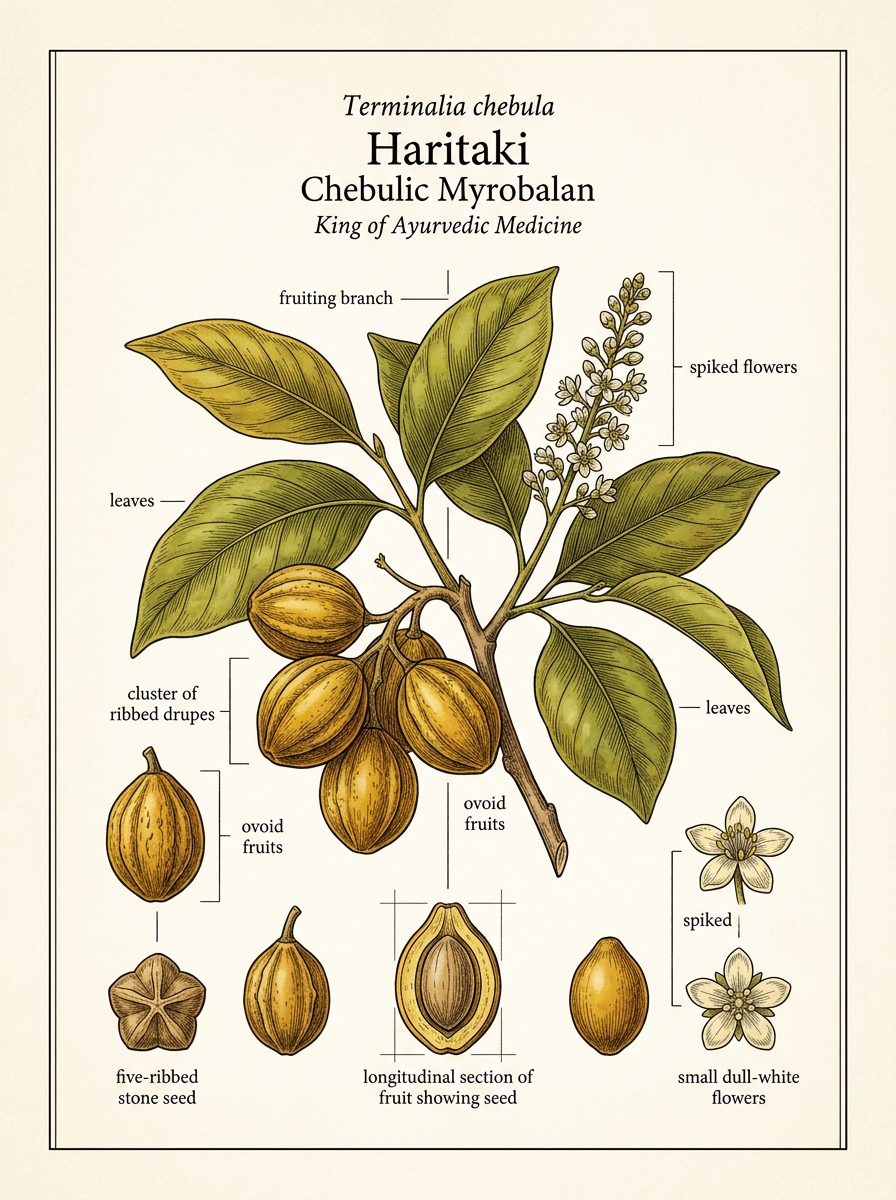
Botanical Plate · 19th c. Scientific AtlasTerminalia chebula
Ayurvedic & Adaptogenic BotanicalsArtisanal Specialty
Haritaki (King of Ayurvedic Medicines / Chebulic Myrobalan)
Native / Vernacular: [हरीतकी (अभया)]
Terminalia chebula·Family: Combretaceae
Primary Geographic TerroirWestern Ghats & Deciduous Forests, India
Flavor Profile & Aroma Notes
AstringentBitterSourSweet finishPungent
"Dry tannic fruit, wood bark, and autumn dried herbs"
Vedic Ayurvedic Energetics
Rasa (Taste)Kashaya (Astringent), Tikta (Bitter), Madhura (Sweet), Katu (Pungent), Amla (Sour) — lacking only Lavana
Virya (Energy)Ushna (Mildly warming)
Vipaka (Post-Digest)Madhura (Sweet)
Prabhava (Special)Anulomana (Gentle peristalsis regulator) & Rasayana
Ayurvedic classification based on Classical Samhitas (Charaka & Sushruta). Balances doshas when formulated in appropriate dietary proportions.
Bioactive Compounds & Health Benefits
- ✓Primary component of Triphala; premier bowel regulator and gentle colon detoxifier
- ✓Rich in chebulinic acid and hydrolyzable tannins with potent prebiotic and antioxidant actions
- ✓Protects gastric mucosa and supports optimal nutrient absorption
Identified Active Phytochemicals:
Chebulinic acidChebulagic acidCorilaginEllagic acidGallic acid
Kitchen & Chef Applications
- Blended into classical Triphala digestive tea taken with warm water and raw honey before sleep
- Infused into digestive jams, herbal preserves, and wellness decoctions
Artisanal Flavor Pairings
BibhitakiAmlaRaw HoneyWarm WaterGhee
Harvest Season & Pantry Care
Harvest Window:Winter to early Spring
Storage Guidelines:Store dried fruit pericarp powder in airtight glass.