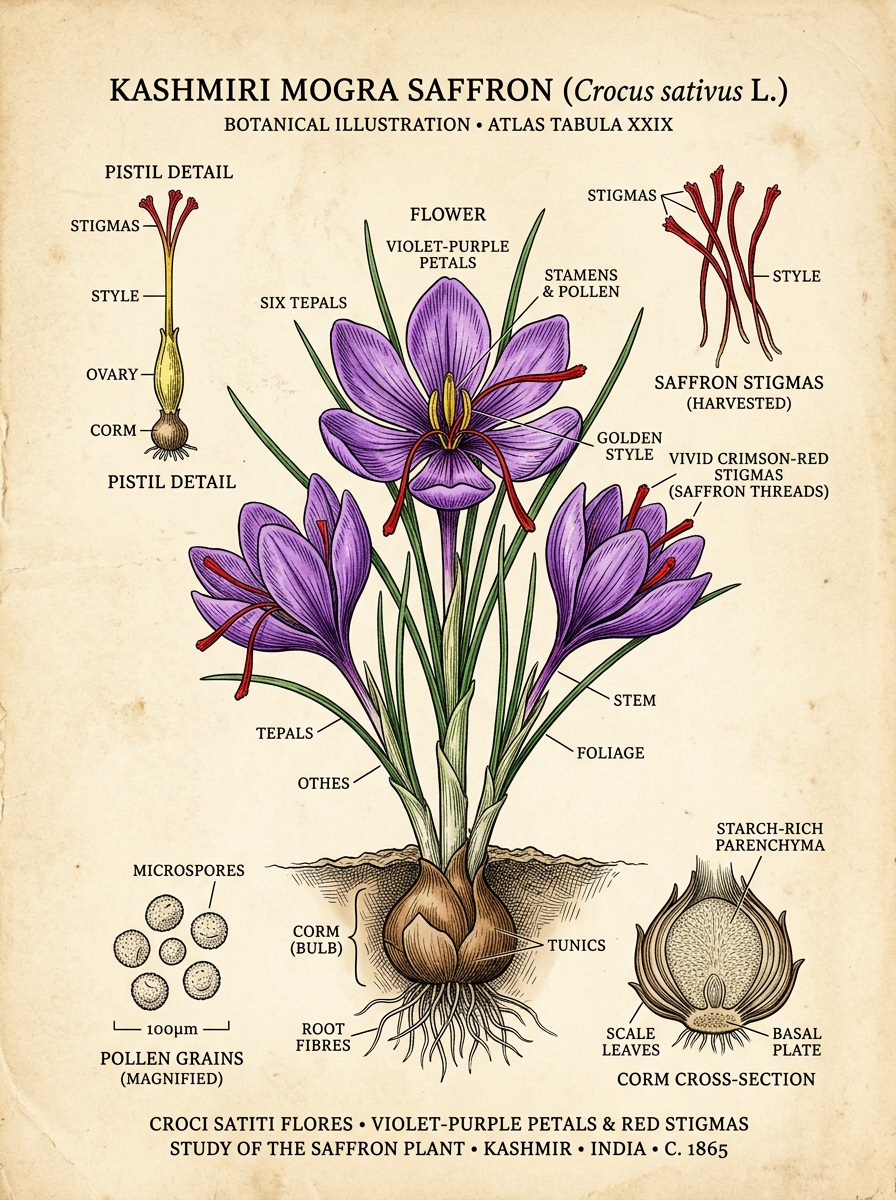
Botanical Plate · 19th c. Scientific AtlasCrocus sativus
Spices & AromaticsRare Terroir
Kashmiri Mogra Saffron
Native / Vernacular: [زعفران کشمیر / कश्मीरी केसर]
Crocus sativus·Family: Iridaceae (Iris family)
Primary Geographic TerroirPampore Karewas Valley, Kashmir, India
Flavor Profile & Aroma Notes
FloralHoneyedEarthySubtly metallicWarm
"Intensely fragrant, sweet hay, dried rose petal, and amber warmth"
Vedic Ayurvedic Energetics
Rasa (Taste)Katu (Pungent), Tikta (Bitter)
Virya (Energy)Ushna (Mildly warming)
Vipaka (Post-Digest)Katu (Pungent)
Prabhava (Special)Hridya (Cardiotonic) & Varnya (Skin luster)
Ayurvedic classification based on Classical Samhitas (Charaka & Sushruta). Balances doshas when formulated in appropriate dietary proportions.
Bioactive Compounds & Health Benefits
- ✓World's highest natural concentration of Crocin (color), Safranal (aroma), and Picrocrocin (flavor)
- ✓Clinically shown to elevate mood and modulate neurotransmitters (natural antidepressant)
- ✓Protects retinal macula and reduces cellular oxidative damage
Identified Active Phytochemicals:
CrocinCrocetinSafranalPicrocrocinKaempferol
Kitchen & Chef Applications
- Steeped in warm whole milk or rosewater for royal biryanis, wazwan, and shahi desserts
- Infused into Persian saffron rice (Tahdig), Spanish Paella Valenciana, and French Bouillabaisse
- Brewed with green tea, crushed almonds, and cardamom into traditional Kashmiri Kahwa
Artisanal Flavor Pairings
Green CardamomPistachioRosewaterBasmati RiceWhole MilkAlmond
Harvest Season & Pantry Care
Harvest Window:Late Autumn (mid-October to mid-November, hand-picked at dawn)
Storage Guidelines:Store in airtight opaque container away from heat and light to preserve safranal oils.