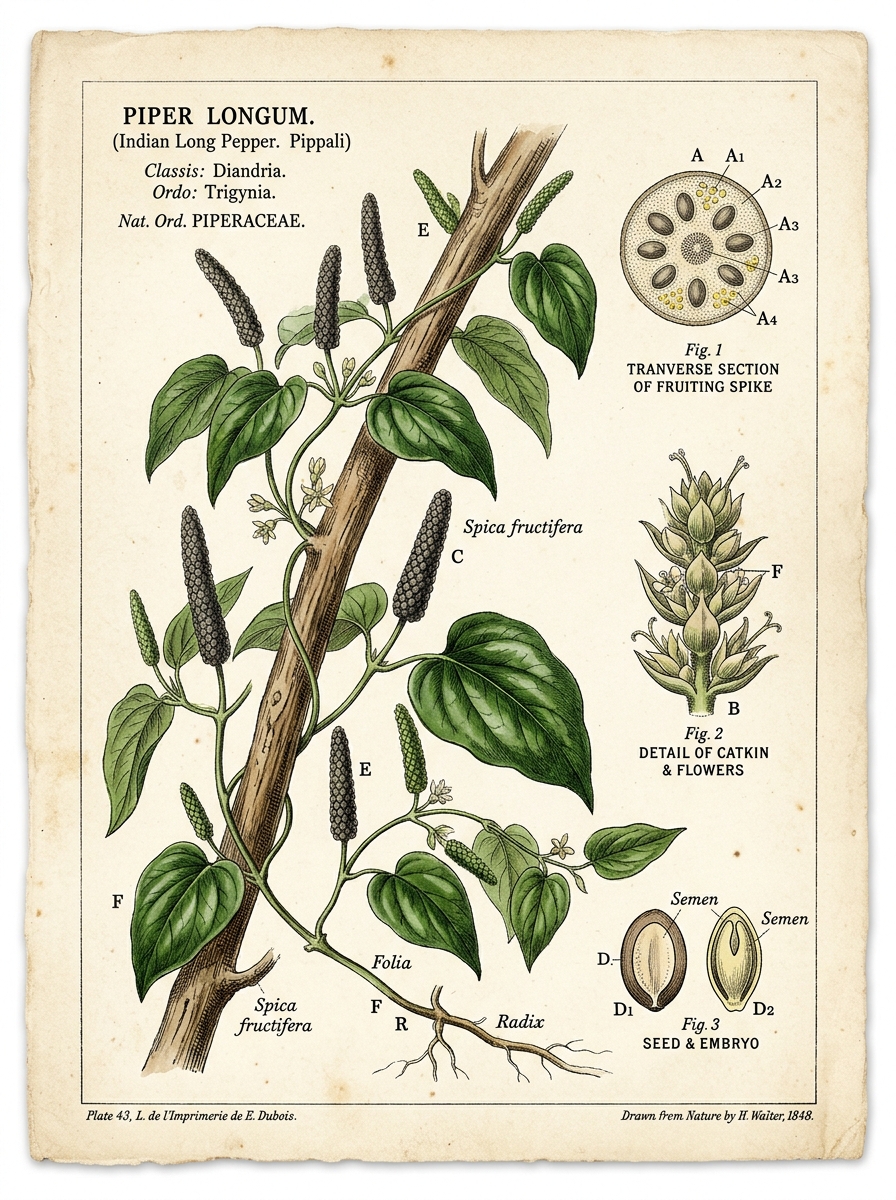
Botanical Plate · 19th c. Scientific AtlasPiper longum
Ayurvedic & Adaptogenic BotanicalsArtisanal Specialty
Pippali (Indian Long Pepper)
Native / Vernacular: [पिप्पली]
Piper longum·Family: Piperaceae (Pepper family)
Primary Geographic TerroirRainforests of Assam & Western Ghats, India
Flavor Profile & Aroma Notes
PungentSweet undertoneNumbingWarm
"Complex sweet-smoky aroma with intense slow-blooming pepper heat and cardamom nuances"
Vedic Ayurvedic Energetics
Rasa (Taste)Katu (Pungent)
Virya (Energy)Anushna (Mildly warming, not overheating)
Vipaka (Post-Digest)Madhura (Sweet)
Prabhava (Special)Dipana (Digestive kindle) & Rasayana (Respiratory rejuvenator)
Ayurvedic classification based on Classical Samhitas (Charaka & Sushruta). Balances doshas when formulated in appropriate dietary proportions.
Bioactive Compounds & Health Benefits
- ✓Premier Ayurvedic bio-enhancer (Yogavahi) increasing absorption of other herbs and nutrients
- ✓Stimulates digestive fire (Agni) without irritating gastric mucosa unlike black pepper
- ✓Expels deep lung Kapha phlegm and supports bronchodilation
Identified Active Phytochemicals:
PiperinePiperlonguminePipernonalineSesaminSylvatine
Kitchen & Chef Applications
- Foundational ingredient in ancient Trikatu digestive formulation (with Black Pepper & Ginger)
- Crushed into Mughlai slow-cooked stews (Nihari, Korma) for intricate layered heat
- Infused into honey syrups for respiratory tonics and chai decoctions
Artisanal Flavor Pairings
GingerBlack PepperRaw HoneyGheeCardamomLamb / Goat
Harvest Season & Pantry Care
Harvest Window:Winter (January - March)
Storage Guidelines:Whole long catkins store up to 3 years without losing essential oils.