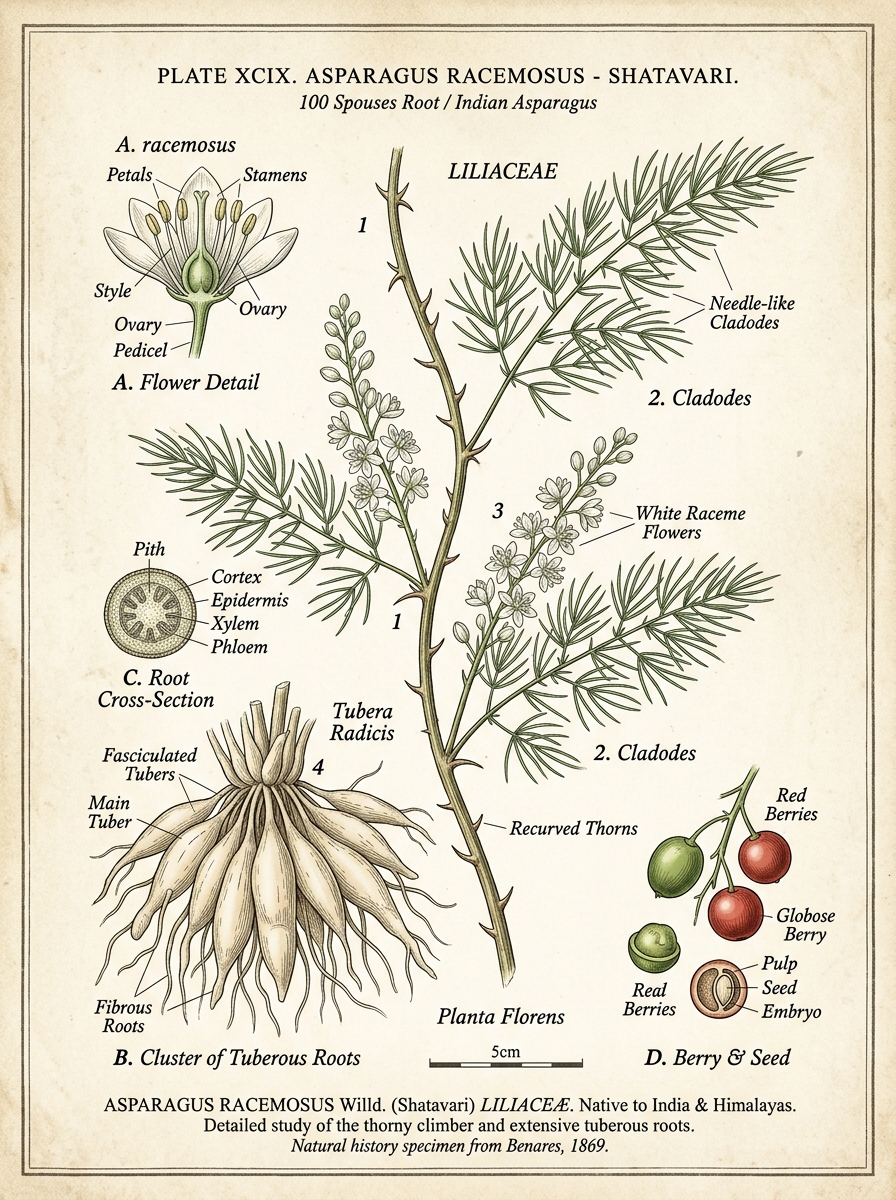
Botanical Plate · 19th c. Scientific AtlasAsparagus racemosus
Ayurvedic & Adaptogenic BotanicalsArtisanal Specialty
Shatavari (Queen of Tonics)
Native / Vernacular: [शतावरी]
Asparagus racemosus·Family: Asparagaceae
Primary Geographic TerroirFoothills of the Himalayas & Tropical Plains, India
Flavor Profile & Aroma Notes
SweetBitterCoolingCreamy
"Mild sweet root aroma with faint vegetal nuttiness"
Vedic Ayurvedic Energetics
Rasa (Taste)Madhura (Sweet), Tikta (Bitter)
Virya (Energy)Shita (Cooling)
Vipaka (Post-Digest)Madhura (Sweet)
Prabhava (Special)Stanyajanana (Galactagogue) & Rasayana (Longevity tonic)
Ayurvedic classification based on Classical Samhitas (Charaka & Sushruta). Balances doshas when formulated in appropriate dietary proportions.
Bioactive Compounds & Health Benefits
- ✓Renowned adaptogen supporting reproductive hormonal harmony and endocrine balance
- ✓Soothes inflamed gastrointestinal mucous membranes (hyperacidity, ulcers)
- ✓Promotes deep tissue hydration (Ojas builder) and cellular replenishment
Identified Active Phytochemicals:
Shatavarins (I-IV)SarsasapogeninSteroidal saponinsIsoflavones
Kitchen & Chef Applications
- Simmered in whole milk with crushed pistachios, cardamom, and saffron
- Infused into morning oatmeal, adaptogenic seed porridges, and herbal lattes
- Formulated into Ayurvedic Ghrithams for digestive and reproductive tonics
Artisanal Flavor Pairings
SaffronCardamomPistachioGheeMilkAlmond Butter
Harvest Season & Pantry Care
Harvest Window:Autumn (October - November)
Storage Guidelines:Keep powdered dried rhizome in dark airtight jars.