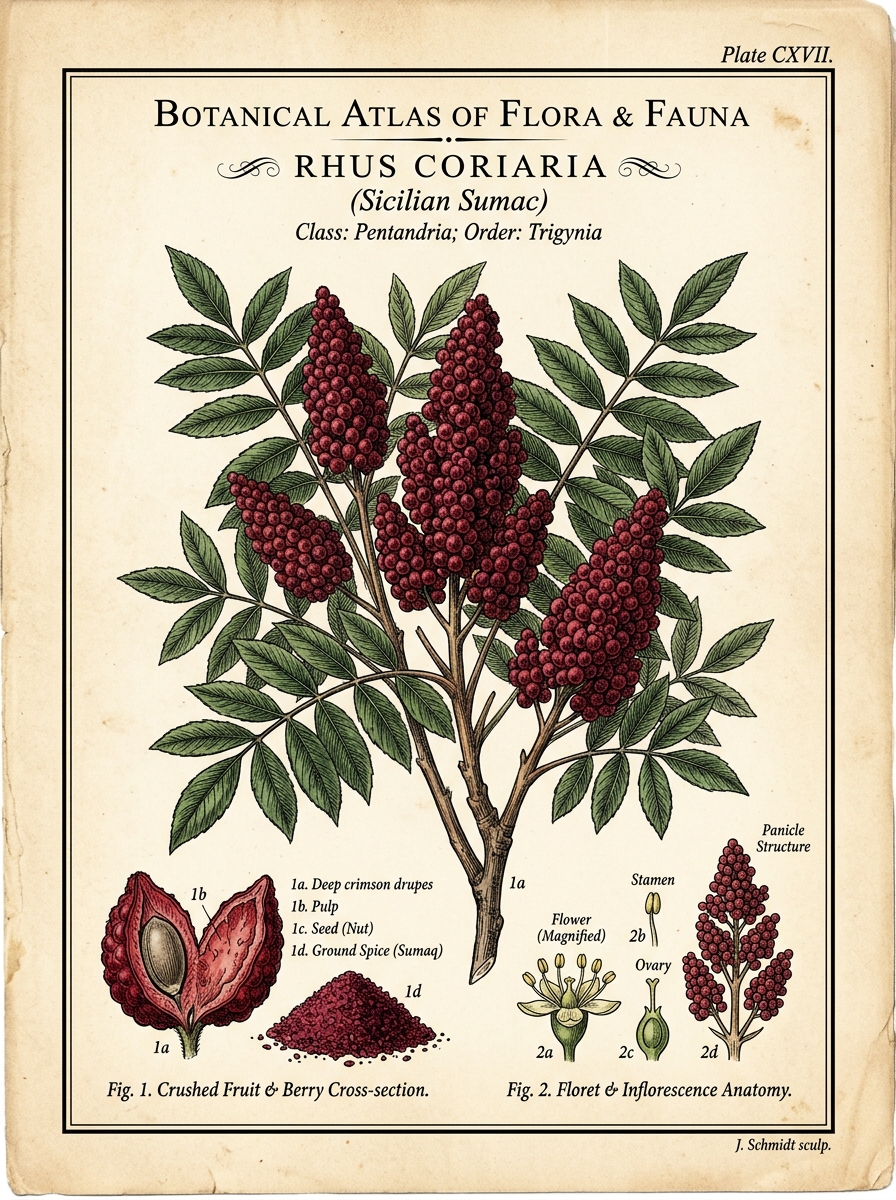
Botanical Plate · 19th c. Scientific AtlasRhus coriaria
Spices & AromaticsEveryday Staple
Wild Syrian Sumac
Native / Vernacular: [سماق]
Rhus coriaria·Family: Anacardiaceae (Cashew family)
Primary Geographic TerroirMount Lebanon & Anti-Lebanon Mountains, Lebanon
Flavor Profile & Aroma Notes
TartCitricAstringentFruityEarthy
"Crisp sour berry, lemon juice, and dry cedar forest breeze"
Nutritional & Functional Profile
This artisanal specimen is celebrated for its natural terroir character, regional fermentation pathways, and culinary heritage.
Bioactive Compounds & Health Benefits
- ✓Phenomenal antioxidant rating (ORAC score > 312,000 µmol TE/100g)
- ✓Rich in anthocyanins and hydrolyzable tannins that support arterial elasticity
- ✓Regulates post-meal blood sugar levels
Identified Active Phytochemicals:
Malic acidTanninsGallic acidAnthocyaninsQuercetin
Kitchen & Chef Applications
- Foundational component of authentic Za'atar seasoning with wild thyme and toasted sesame
- Generously dusted over grilled kebabs, Fattoush salads, and raw sliced onions
- Used as an ancient acidic tenderizer for meats before the introduction of lemons
Artisanal Flavor Pairings
Za'atarRed OnionGrilled LambOlive OilYogurtCucumber
Harvest Season & Pantry Care
Harvest Window:Late Summer (August - September)
Storage Guidelines:Keep in a dark airtight glass container.