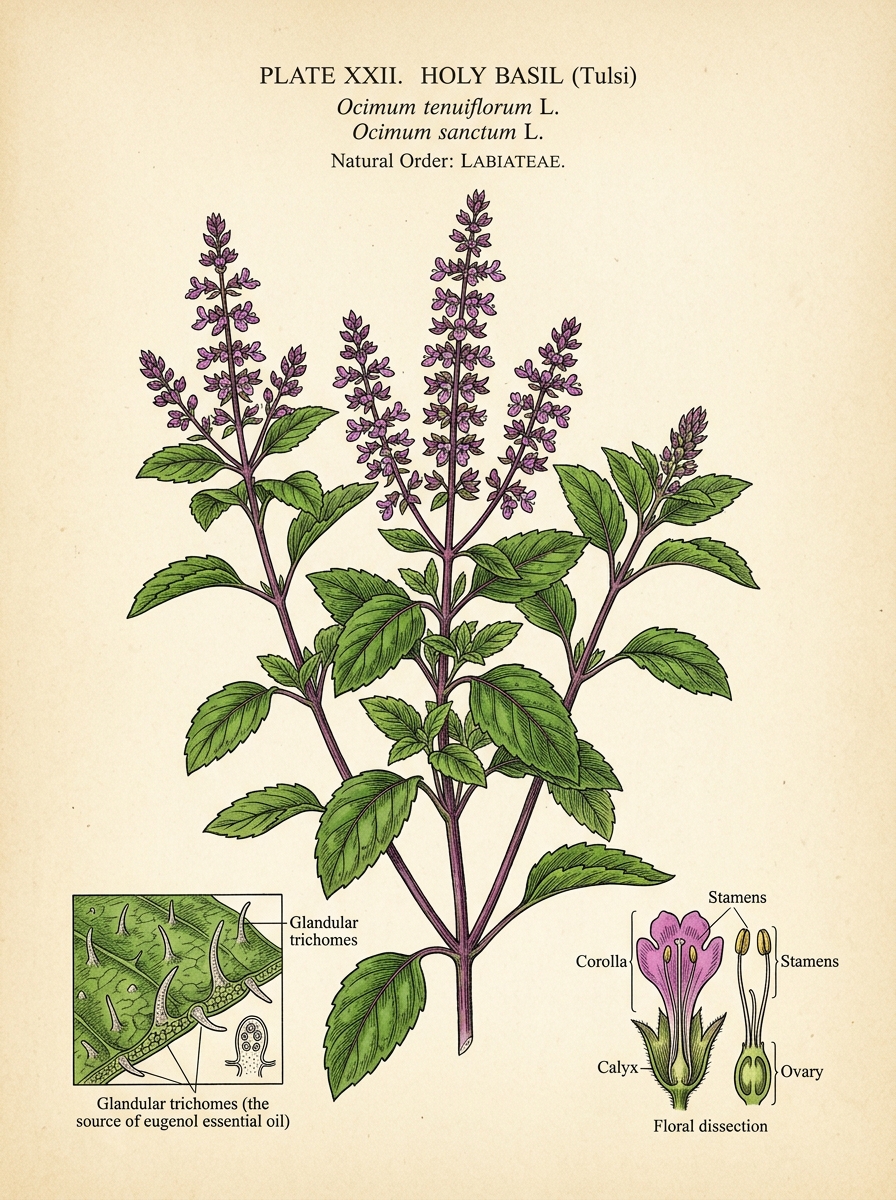
Botanical Plate · 19th c. Scientific AtlasOcimum tenuiflorum (syn. Ocimum sanctum)
Ayurvedic & Adaptogenic BotanicalsArtisanal Specialty
Tulsi (Holy Basil / Queen of Herbs)
Native / Vernacular: [तुलसी (कृष्ण / राम तुलसी)]
Ocimum tenuiflorum (syn. Ocimum sanctum)·Family: Lamiaceae (Mint family)
Primary Geographic TerroirVaranasi & Indo-Gangetic Plains, India
Flavor Profile & Aroma Notes
PepperyClove-likeHerbaceousSweet
"Pungent, sweet-spicy with high eugenol notes reminiscent of clove and star anise"
Vedic Ayurvedic Energetics
Rasa (Taste)Katu (Pungent), Tikta (Bitter)
Virya (Energy)Ushna (Heating)
Vipaka (Post-Digest)Katu (Pungent)
Prabhava (Special)Hridya (Cardioprotective) & Deepana (Digestive fire igniter)
Ayurvedic classification based on Classical Samhitas (Charaka & Sushruta). Balances doshas when formulated in appropriate dietary proportions.
Bioactive Compounds & Health Benefits
- ✓Protects against metabolic and psychological stress
- ✓Potent antimicrobial, antiviral, and respiratory decongestant
- ✓Rich in eugenol, carvacrol, and ursolic acid with high antioxidant capacity
Identified Active Phytochemicals:
EugenolUrsolic acidRosmarinic acidCaryophyllene
Kitchen & Chef Applications
- Steeped fresh in sacred herbal infusions and digestive tisanes
- Muddled into citrus coolers, adaptogenic kombuchas, and herbal sorbets
- Finely chopped into tempered ghee with cumin for therapeutic khichdi
Artisanal Flavor Pairings
GingerBlack PepperRaw HoneyLemonCardamomClove
Harvest Season & Pantry Care
Harvest Window:Year-round in sub-tropical climates
Storage Guidelines:Fresh leaves used within 2 days; dried leaves kept in vacuum tin.