←All recipes
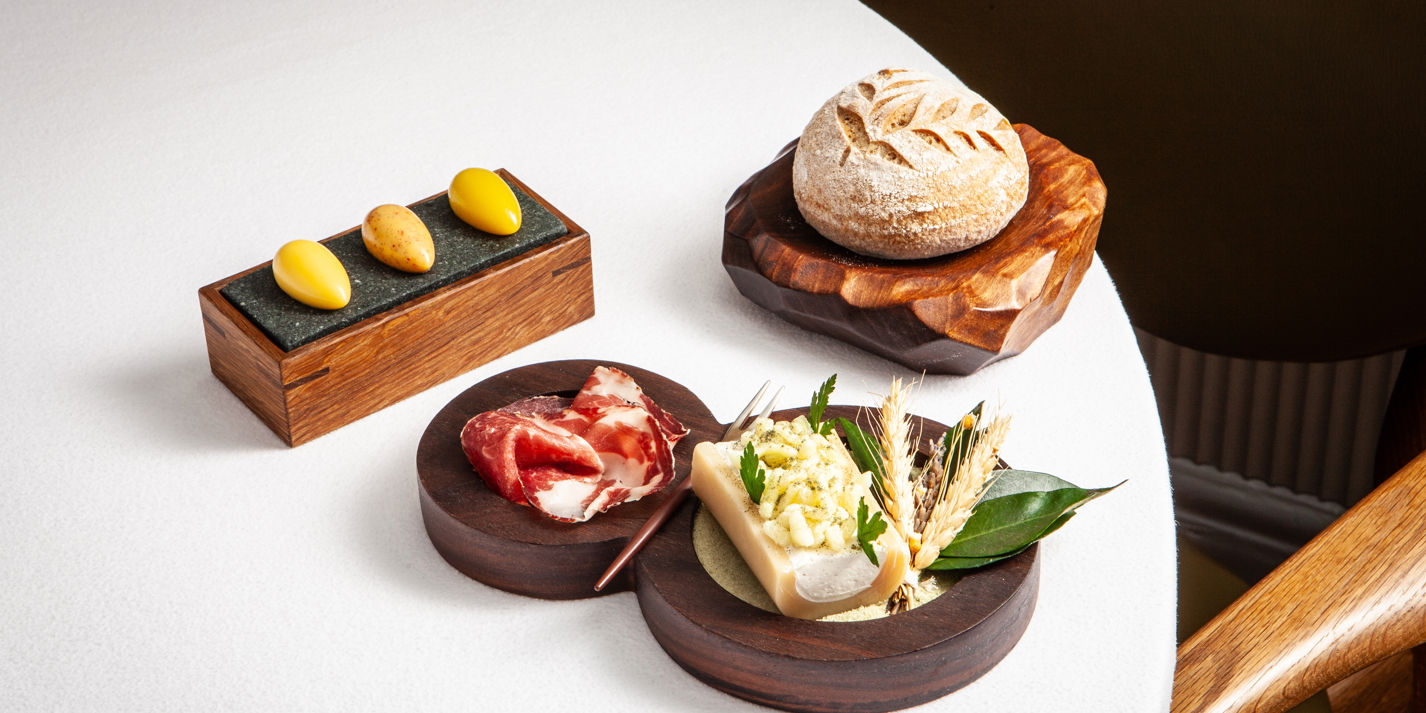
Sourdough with whipped bone marrow, cultured butters and coppa
External · via Great British ChefsBread

Sourdough with whipped bone marrow, cultured butters and coppa

1. DAY 1 For the cultured butters, first make a fermented cream. Mix the buttermilk and cream together, pour into a container and cover loosely with a clean cloth so the air can get to it. Leave in a cool, dark place at room temperature for at least 48 hours, whisking every 12 hours and tasting to check the flavour – it’s ready when you have a sufficiently sour flavour 2. DAY 3 Once the fermented cream is sour enough, place it in the fridge for 24 hours 3. For the wholemeal sourdough loaves, place the flours, water and treacle in a stand mixer fitted with a dough hook and mix for 5 minutes on a low (but not the lowest) speed 4. Add the starter and mix for a further 5 minutes until fully incorporated 5. Add the salt, turn down to the lowest speed and mix for a further 5 minutes 6. Roll the dough out onto a floured work surface in a warm part of the kitchen. Fold it every 10-20 minutes to help create tension and structure in the dough, until it feels tough – the length of time depends on the warmth of your kitchen – typically this will take 3-5 hours (cover with a cloth in between folds) 7. Divide the dough into 110g portions, being mindful not to degas the dough. Once portioned, shape the dough into balls, transfer to round mini bannetons, cover and place in the fridge to prove overnight 8. DAY 4 Chill the bowl of a stand mixer in the fridge or freezer ahead of making the butter 9. To make a sage powder to garnish the bone marrow, dehydrate the sage leaves in a dehydrator at 38°C for 2½ hours, until crisp and crumbly. Blitz into a powder in a spice grinder and set aside 10. After 24 hours in the fridge, place the fermented cream in a stand mixer fitted with a whisk attachment and whisk until the mixture splits into butter and buttermilk – make sure the mixture stays cold as you whisk 11. Strain the butter and buttermilk through a colander set over a bowl then lightly squeeze the butter in a clean cloth to remove excess buttermilk 12. Weigh the butter to calculate 1.5% of its weight in salt then beat that in using a spatula or electric whisk 13. Split the butter in half and set half aside. Weigh the remainder to calculate 3% of its weight in ground pink peppercorns, then beat that in using a spatula or electric whisk. Set the 2 flavoured butters in a 600mm x 400mm silicone quenelle mould in the fridge 14. For the whipped olive oil, use a handheld blender and a tall narrow jug to emulsify the Glice Emul and olive oil together to a butter consistency. Set in a 600mm x 400mm silicone quenelle mould in the fridge for a minimum of 4 hours (this will make double what you need) 15. To bake the sourdough, preheat the oven and a baking tray or pizza stone to 250°C 16. Invert the loaves onto the hot tray, score with a razor blade to a depth of 2mm and bake for 14 minutes (you may have to work in batches). Transfer to a wire rack to cool and reduce the temperature to 180°C 17. For the bone marrow, roast the bones for 1 hour to melt the marrow. Once melted, scoop out the marrow and put in a container to cool to room temperature. Clean the bones and reserve 18. Once the marrow is cool, use a balloon whisk to whip it until it reaches the consistency of butter. Store in the fridge in an airtight container if not serving right away 19. Ahead of serving, bring the whipped marrow up to room temperature if needed, then transfer to the cleaned bones. Remove the butter from the moulds and leave to come up to room temperature 20. For the potato topping, heat the vegetable oil in a deep pan over a medium-high heat, or preheat a deep-fat fryer to 180°C. Deep-fry the dehydrated potatoes shreds until puffed for a few seconds, then drain on kitchen paper 21. To serve, garnish the bone marrow with the sage powder, the puffed potatoes and parsley leaves. Serve with 1 sourdough roll, 1 quenelle of each of the cultured butters and olive oil per person and some coppa

Yield 4 portions
Active Time⏱ 45 mins
Station Station
Baker's percentages 100% flour base
SourdoughCultured butterBone marrow
Interactive Kitchen Cook ModeWake-Lock ON
Distraction-free step progression with built-in station timers for the line.

Mise en place & ingredients

Check off ingredients as you weigh and prep your kitchen station. Baker's percentage displayed.
Scale:
buttermilk
150g of31.6%
double cream
300g of63.2%
pink peppercorns, ground into a powder
To taste
white bread flour, (Rafael uses Shipton Mill flour), plus extra to dust
475g of100%
strong wholemeal flour
54g of11.4%
filtered water, chilled
380g of80%
black treacle
38g of8%
sourdough starter, ripe (see note)
135g of28.4%
fine sea salt
17.5g of3.7%
sage leaves
60g of12.6%
centre-cut beef marrow bones, washed thoroughly then soaked in water overnight to get rid of blood
102.1%
dehydrated potato shreds
6 tsp1.3%
parsley leaves, to garnish
To taste
vegetable oil, for deep-frying
To taste
Glice Emul emulsifier
10g of2.1%
olive oil, (Rafael uses Gonnelli olive oil)
100g of21.1%
coppa, (Rafael cures his own at De Terra)
To taste

Method & kitchen timing

Commercial kitchen method. Click any step to mark complete or start a timer.
1

1. DAY 1 For the cultured butters, first make a fermented cream. Mix the buttermilk and cream together, pour into a container and cover loosely with a clean cloth so the air can get to it. Leave in a cool, dark place at room temperature for at least 48 hours, whisking every 12 hours and tasting to check the flavour – it’s ready when you have a sufficiently sour flavour

2

2. DAY 3 Once the fermented cream is sour enough, place it in the fridge for 24 hours

3

3. For the wholemeal sourdough loaves, place the flours, water and treacle in a stand mixer fitted with a dough hook and mix for 5 minutes on a low (but not the lowest) speed

4

4. Add the starter and mix for a further 5 minutes until fully incorporated

5

5. Add the salt, turn down to the lowest speed and mix for a further 5 minutes

6

6. Roll the dough out onto a floured work surface in a warm part of the kitchen. Fold it every 10-20 minutes to help create tension and structure in the dough, until it feels tough – the length of time depends on the warmth of your kitchen – typically this will take 3-5 hours (cover with a cloth in between folds)

7

7. Divide the dough into 110g portions, being mindful not to degas the dough. Once portioned, shape the dough into balls, transfer to round mini bannetons, cover and place in the fridge to prove overnight

8

8. DAY 4 Chill the bowl of a stand mixer in the fridge or freezer ahead of making the butter

9

9. To make a sage powder to garnish the bone marrow, dehydrate the sage leaves in a dehydrator at 38°C for 2½ hours, until crisp and crumbly. Blitz into a powder in a spice grinder and set aside

10

10. After 24 hours in the fridge, place the fermented cream in a stand mixer fitted with a whisk attachment and whisk until the mixture splits into butter and buttermilk – make sure the mixture stays cold as you whisk

11

11. Strain the butter and buttermilk through a colander set over a bowl then lightly squeeze the butter in a clean cloth to remove excess buttermilk

12

12. Weigh the butter to calculate 1.5% of its weight in salt then beat that in using a spatula or electric whisk

13

13. Split the butter in half and set half aside. Weigh the remainder to calculate 3% of its weight in ground pink peppercorns, then beat that in using a spatula or electric whisk. Set the 2 flavoured butters in a 600mm x 400mm silicone quenelle mould in the fridge

14

14. For the whipped olive oil, use a handheld blender and a tall narrow jug to emulsify the Glice Emul and olive oil together to a butter consistency. Set in a 600mm x 400mm silicone quenelle mould in the fridge for a minimum of 4 hours (this will make double what you need)

15

15. To bake the sourdough, preheat the oven and a baking tray or pizza stone to 250°C

16

16. Invert the loaves onto the hot tray, score with a razor blade to a depth of 2mm and bake for 14 minutes (you may have to work in batches). Transfer to a wire rack to cool and reduce the temperature to 180°C

17

17. For the bone marrow, roast the bones for 1 hour to melt the marrow. Once melted, scoop out the marrow and put in a container to cool to room temperature. Clean the bones and reserve

18

18. Once the marrow is cool, use a balloon whisk to whip it until it reaches the consistency of butter. Store in the fridge in an airtight container if not serving right away

19

19. Ahead of serving, bring the whipped marrow up to room temperature if needed, then transfer to the cleaned bones. Remove the butter from the moulds and leave to come up to room temperature

20

20. For the potato topping, heat the vegetable oil in a deep pan over a medium-high heat, or preheat a deep-fat fryer to 180°C. Deep-fry the dehydrated potatoes shreds until puffed for a few seconds, then drain on kitchen paper

21

21. To serve, garnish the bone marrow with the sage powder, the puffed potatoes and parsley leaves. Serve with 1 sourdough roll, 1 quenelle of each of the cultured butters and olive oil per person and some coppa

Recipe from Great British Chefs · Licensed under Publisher © — teaser only
Advertisement
Culinect for chefs

Save recipes. Cook faster. Learn deeper.

Create a free CuliNect profile to save recipes, track your kitchen history, publish your own chef-authored recipes with nutrition — and discover jobs in professional kitchens near you.